

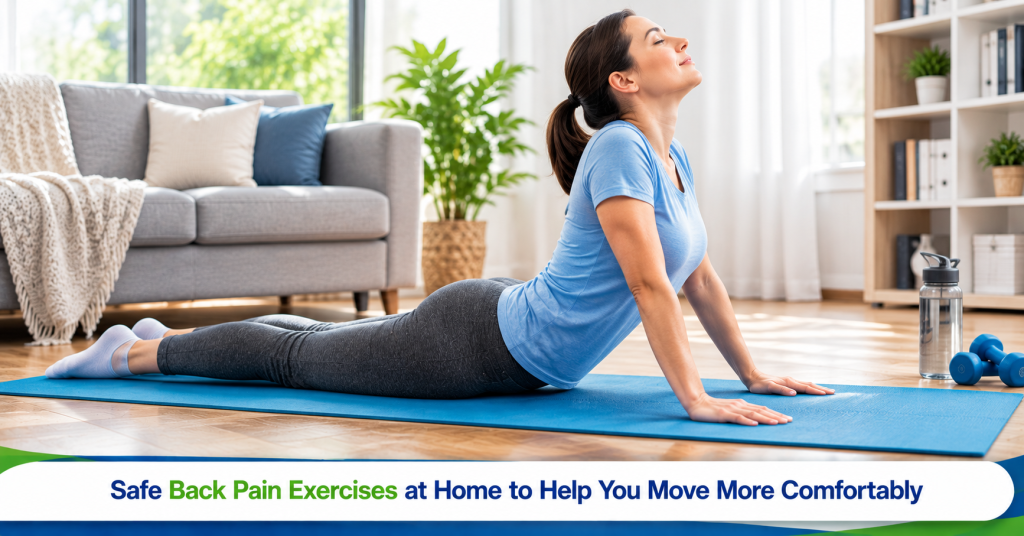
Living with back pain can make even simple daily tasks, like bending down to tie your shoes or reaching for something on a shelf, feel harder than they should. The good news is that you do not always need special equipment or a gym membership to start feeling better. Meade Chiropractic often recommends a set of simple, safe back pain exercises at home that patients can use to build strength, improve flexibility, and move more comfortably every day.
In this guide, we will cover why home exercises matter, safety guidelines to follow, a full list of gentle exercises you can start today, common mistakes to avoid, and when it is time to get a professional evaluation.
Why Home Exercises Matter for Back Pain
Your spine relies on a support system of muscles, ligaments, and joints working together. When your core and back muscles are weak or tight, your spine loses some of its natural stability, which can lead to nagging aches or sharp discomfort. Gentle, consistent movement helps keep blood flowing to spinal discs, reduces stiffness, and rebuilds the strength your back needs to handle everyday activities without strain.
Regular back pain exercises at home also help prevent future flare-ups. Instead of only treating pain after it shows up, a simple daily routine keeps your spine mobile and your supporting muscles strong, so small problems are less likely to turn into bigger ones. Over weeks and months, this steady approach often does more for your long-term comfort than any single treatment on its own.
Before You Start: Safety Guidelines
Before jumping into any routine, keep a few safety basics in mind. Move slowly and avoid sudden, jerky motions. Stop immediately if you feel sharp or shooting pain, though mild muscle tiredness is normal. Breathe steadily throughout each movement instead of holding your breath, and always warm up with a few minutes of gentle walking before stretching.
If you have numbness, tingling, or pain that radiates down your leg, check with a chiropractor before starting a new exercise routine, since these symptoms may need a more specific approach.
Safe Back Pain Exercises You Can Do at Home
Cat-Cow Stretch
Get on your hands and knees. Slowly arch your back upward like a cat, then dip it downward while lifting your chest and tailbone. This gentle flow warms up the entire spine and improves mobility between each vertebra.
Pelvic Tilts
Lie on your back with your knees bent and feet flat on the floor. Gently flatten your lower back against the floor by tightening your abdominal muscles, hold briefly, then release. This move strengthens deep core muscles that support your lower spine.
Bird-Dog
Starting on your hands and knees, extend one arm forward and the opposite leg straight back while keeping your hips level. Hold for a few seconds, then switch sides. This exercise builds core stability without putting pressure on the spine.
Bridge
Lying on your back with knees bent, lift your hips toward the ceiling while squeezing your glutes, then lower back down slowly. Bridges strengthen your glutes and lower back muscles, which take pressure off your spine during daily movement.
Knee-to-Chest Stretch
Lying on your back, pull one knee gently toward your chest and hold, then switch legs. This stretch relieves tension in the lower back and improves flexibility in the hips.
Child’s Pose
Kneel and sit back on your heels, then stretch your arms forward and lower your chest toward the floor. This restful stretch gently elongates the spine and releases tension built up throughout the day.
Common Mistakes to Avoid When Exercising at Home
- Pushing through sharp pain instead of stopping and resting
- Skipping the warm-up and jumping straight into stretches
- Doing exercises too fast instead of moving with control
- Only exercising when pain flares up instead of staying consistent
- Ignoring posture during exercises, which can undo the benefit
Expert Tips for Long-Term Relief
Consistency matters more than intensity. A short, gentle routine done daily is usually far more effective than an intense session done once a week. Pairing these exercises with good posture, regular movement breaks throughout the day, and posture exercises and stretches designed for your specific needs gives your spine the best chance to heal and stay strong.
Combining a home routine with periodic spinal manipulation and hands-on care can also help correct alignment issues that exercise alone cannot fully address, especially if your pain has been building for months or years.
If you live in Florence or Highland Heights, or commute through Newport, Silver Grove, or Boone County, working with a nearby chiropractor makes it easier to combine home exercises with professional guidance for lasting low back pain relief.
When Home Exercises Aren’t Enough
If your pain does not improve after a few weeks of consistent home exercises, or if it comes with numbness, tingling, or weakness in your legs, it is time to seek professional care. A chiropractic evaluation can identify exactly which joints, discs, or muscles are involved and build a plan tailored to your specific situation rather than relying on generic stretches alone.
Frequently Asked Questions
What are the best back pain exercises at home for beginners?
Gentle movements like pelvic tilts, cat-cow stretches, and knee-to-chest stretches are great starting points because they are low-impact and easy to learn without any equipment.
How often should I do back pain exercises at home?
Most people benefit from doing a short routine daily or at least five days a week. Consistency is more important than doing a long session occasionally.
Can back pain exercises at home make my pain worse?
If done correctly and slowly, these exercises should not worsen pain. Sharp or shooting pain during an exercise is a sign to stop and check with a chiropractor.
How long does it take to see results from home exercises for back pain?
Many people notice reduced stiffness within one to two weeks of consistent practice, though full strength and flexibility improvements often take four to six weeks.
Are back pain exercises at home safe for everyone?
Most gentle stretches and core exercises are safe for the general population, but anyone with numbness, tingling, or a recent injury should check with a chiropractor before starting.
Should I stretch or strengthen first for back pain relief?
A combination works best. Light stretching to loosen tight muscles followed by gentle strengthening exercises like bridges and bird-dogs helps build lasting support for your spine.
Contact Meade Chiropractic
Florence, KY Chiropractic Office
Call: 859-640-6770
Highland Heights, KY Chiropractic Office
Call: 859-441-8181
Visit: Meade Chiropractic
Conclusion
Safe back pain exercises at home are one of the simplest and most effective ways to move more comfortably and build a stronger, more resilient spine. By starting slowly, staying consistent, and paying attention to your body’s signals, you can reduce stiffness and prevent future flare-ups. Small, steady effort each day adds up to real, lasting change over time. If pain persists despite your best efforts, a chiropractic evaluation can help uncover what home exercises alone cannot fix.
Summary
Safe back pain exercises at home, such as cat-cow stretches, pelvic tilts, bird-dogs, and bridges, help build core strength and spinal flexibility. Consistency, proper form, and stopping at sharp pain are key, and professional chiropractic care can help when home exercises alone are not enough.