

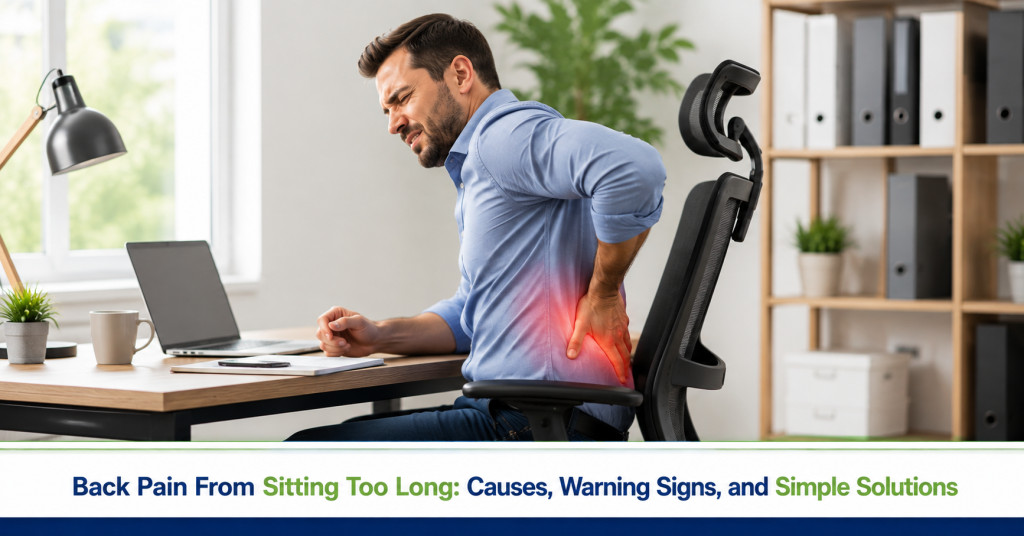
If you spend most of your day behind a desk, you already know the feeling. You stand up after a long stretch of sitting, and your lower back feels stiff, tight, or downright sore. Back pain from sitting too long is one of the most common complaints local chiropractors hear, and Meade Chiropractic sees this pattern constantly in patients from every walk of life, from office workers to truck drivers to students. The good news is that this kind of pain is usually preventable and treatable once you understand what is really causing it.
In this guide, we will walk through why prolonged sitting hurts your back, the warning signs you should never ignore, common mistakes people make while trying to fix the problem, and simple, practical solutions you can start using today.
Why Sitting for Long Hours Hurts Your Back
Your spine is built to move. When you sit for hours without a break, blood flow slows down and pressure builds up in your lower spine. Sitting actually puts more pressure on the lumbar discs than standing does, especially when you slouch or lean toward a screen.
Over time, this pressure combined with poor posture leads to muscle imbalances. Your hip flexors and chest muscles tighten, while your glutes and core weaken from lack of use. This pulls your pelvis out of its natural alignment, a major reason so many people develop chronic low back pain from sitting at a desk all day.
Common Causes of Back Pain From Sitting Too Long
Poor Posture at Your Desk
Slouching, leaning forward, or sitting with rounded shoulders puts extra strain on your spine. Over an eight-hour workday, even small posture mistakes add up to a lot of stress on your lower back and neck.
Weak Core and Tight Hip Flexors
Sitting shortens your hip flexor muscles and allows your core muscles to weaken. A weak core means your spine loses some of its natural support system, making it easier to strain your back with everyday movements.
Lack of Lumbar Support
Most office chairs, car seats, and couches do not support the natural inward curve of your lower back. Without that support, your lumbar spine tends to flatten or round, which increases pressure on the discs and joints.
Staying in One Static Position
Even good posture becomes a problem if you hold it without moving for too long. Muscles and joints need regular movement to stay flexible. Sitting still for hours, even in a perfect chair, can still lead to stiffness and pain.
Warning Signs You Shouldn’t Ignore
Occasional stiffness after a long day is common, but certain symptoms suggest it is time to pay closer attention:
- Pain that lingers for more than a few days after you stand up
- Numbness or tingling that spreads down into your hips, legs, or feet
- Back pain that gets worse instead of better with rest
- Sharp pain when bending, twisting, or standing up from a seated position
- Pain that disrupts your sleep or daily activities
These signs can point to issues like disc irritation, nerve compression, or sacroiliac joint dysfunction, and they are a good reason to have your spine evaluated rather than waiting for the pain to go away on its own.
Simple Solutions to Relieve and Prevent Sitting-Related Back Pain
Fix Your Sitting Posture
Keep your ears, shoulders, and hips stacked in one line. Your knees should be roughly level with your hips, feet flat on the floor, and your lower back gently supported so it keeps its natural curve.
Take Movement Breaks
Set a timer to stand up, stretch, or walk for a couple of minutes every 30 to 45 minutes. This simple habit keeps blood flowing to your spinal discs and prevents muscles from locking into one position.
Strengthen Your Core
Simple exercises like planks, bird-dogs, and gentle bridges can build the support your back needs to handle long sitting hours.
Stretch Your Hip Flexors and Hamstrings
Because sitting tightens these muscle groups, a few minutes of daily stretching can restore flexibility and reduce the pull on your lower back and pelvis. Our posture exercises and stretches page has simple routines you can follow at home.
Set Up an Ergonomic Workstation
Adjust your chair height, monitor position, and keyboard placement so your body stays in a neutral position. A small cushion or chair with built-in lumbar support can make a noticeable difference.
Get Regular Spinal Check-Ups
Spinal manipulation and hands-on adjustments can help restore proper alignment, relieve pressure on irritated nerves, and improve mobility in joints that have grown stiff from long hours of sitting.
Common Mistakes People Make When Dealing With Sitting-Related Back Pain
- Relying only on painkillers instead of correcting posture and movement habits
- Buying an expensive chair but never adjusting it properly
- Stretching once in a while instead of building a consistent daily habit
- Ignoring early stiffness until it turns into sharp, persistent pain
- Assuming a standing desk alone will fix the problem without changing posture habits
Expert Advice for Long-Term Relief
Fixing back pain from sitting too long is rarely about one single change. It usually takes a combination of better posture, regular movement, a stronger core, and, when needed, professional care to correct alignment issues that have built up over months or years. A local chiropractor can assess how your spine, hips, and posture are working together and build a plan around your specific situation rather than a generic fix.
Patients dealing with low back pain relief often see the fastest improvement when they combine at-home habit changes with hands-on care. If you commute from Newport, Fort Thomas, or Independence, or work throughout Campbell County and Kenton County, a nearby chiropractor can make it much easier to stay consistent with treatment and see lasting results.
When to See a Chiropractor for Back Pain From Sitting Too Long
If your back pain lasts longer than a week, keeps coming back, or comes with numbness, tingling, or weakness in your legs, it is time to get it checked out. Waiting too long can allow poor movement patterns to become deeply ingrained, making recovery slower down the road. A chiropractic evaluation can identify exactly which joints, muscles, or discs are contributing to your pain and guide you toward a targeted recovery plan.
Frequently Asked Questions
How long can I sit before it starts to hurt my back?
For many people, discomfort can start after just 30 to 60 minutes of continuous sitting, especially with poor posture. Taking short movement breaks every half hour is one of the simplest ways to prevent back pain from sitting too long.
What is the best sitting position to avoid back pain?
Sit with your feet flat on the floor, knees level with your hips, and your lower back supported so it keeps its natural curve. Avoid slouching forward toward your screen for long stretches.
Can sitting too long cause permanent back damage?
Sitting itself rarely causes permanent damage, but years of poor posture and inactivity can lead to chronic muscle imbalances, disc issues, and joint stiffness if left uncorrected. Catching the problem early makes a big difference.
What exercises help back pain from sitting too long?
Planks, bridges, bird-dogs, hip flexor stretches, and hamstring stretches are all effective for counteracting the effects of prolonged sitting and building a stronger, more resilient back.
Should I use a standing desk for back pain from sitting?
A standing desk can help by adding variety to your day, but standing all day with poor posture can cause its own problems. Alternating between sitting and standing, combined with good posture, works best.
When should I see a chiropractor for sitting-related back pain?
If your pain lasts more than a week, keeps returning, or comes with numbness or tingling in your legs, it is a good time to schedule a chiropractic evaluation rather than waiting for it to resolve on its own.
Contact Meade Chiropractic
Florence, KY Chiropractic Office
Call: 859-640-6770
Highland Heights, KY Chiropractic Office
Call: 859-441-8181
Visit: Meade Chiropractic
Conclusion
Back pain from sitting too long is incredibly common, but it does not have to be a permanent part of your daily routine. By fixing your posture, taking regular movement breaks, strengthening your core, and getting your spine checked when needed, you can break the cycle of stiffness and discomfort that builds up behind a desk. Small, consistent changes today can save you from years of nagging back pain down the road.
Summary
Back pain from sitting too long usually stems from poor posture, weak core muscles, and tight hip flexors. Relief comes from better ergonomics, frequent movement breaks, core-strengthening exercises, and chiropractic care to restore spinal alignment and reduce nerve or joint irritation over time.