

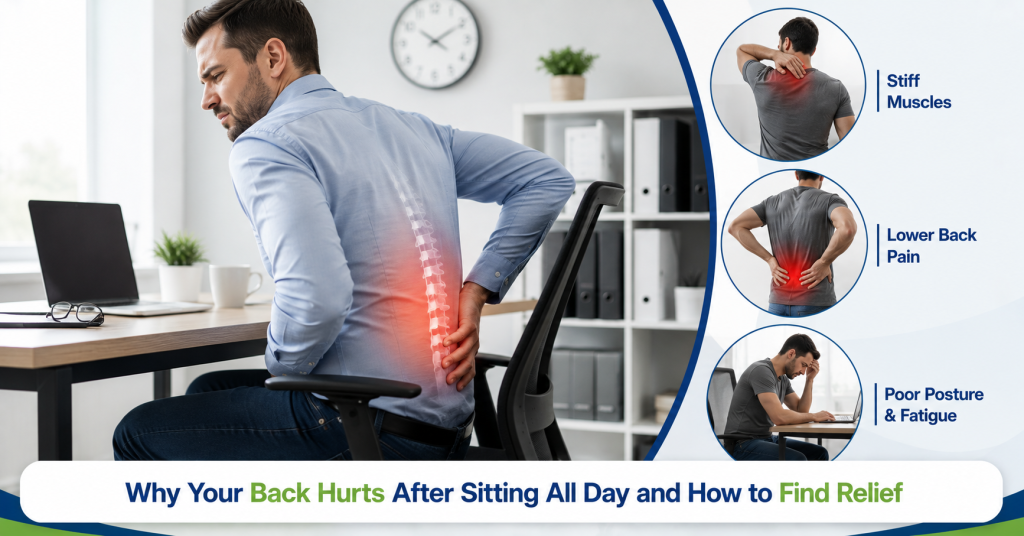
By 3 p.m., your back is stiff, achy, and begging you to stand up. If this sounds familiar, you’re dealing with a very common issue: back pain from sitting too long, and it’s one of the most frequent complaints we hear at Meade Chiropractic from people whose jobs, commutes, or daily routines keep them seated for hours at a stretch.
The good news is that once you understand what’s actually happening to your spine while you sit, finding real relief becomes a lot more straightforward. Let’s break it down.
Why Sitting All Day Is So Hard on Your Back
Your spine is built to move, not stay locked in one position for hours. Sitting places sustained, uneven demands on your discs, joints, and muscles that standing and walking simply don’t. The longer you stay seated without a break, the more that strain accumulates, often without you noticing until it’s already turned into noticeable pain.
What Happens to Your Spine When You Sit for Long Periods
Increased Pressure on Spinal Discs
Sitting actually places more pressure on your spinal discs than standing does. Hour after hour, that added pressure adds up, contributing to stiffness and discomfort by the end of the day.
Tight Hip Flexors Pull on the Lower Back
When your hips stay bent for extended periods, the muscles at the front of your hips gradually shorten and tighten. Tight hip flexors pull on your pelvis and lower back, contributing directly to lower back pain.
Weak Glutes Shift More Load to the Spine
Prolonged sitting deactivates your glute muscles, which normally help support your lower back and pelvis during movement. Weaker glutes mean your spine ends up absorbing more of the load it wasn’t designed to handle alone.
Poor Posture Compounds the Strain
Slouching, a common habit during long sitting sessions, flattens your lower back’s natural curve, adding even more uneven pressure to already-strained discs and muscles.
Common Signs Your Back Pain Is Sitting-Related
- Pain that builds gradually throughout the workday and peaks by late afternoon
- Stiffness that improves noticeably after standing and moving around
- Discomfort that’s worse on days with more sitting, better on more active days
- Tightness in the front of the hips alongside lower back discomfort
- Pain that eases somewhat over the weekend, then returns during the workweek
Common Mistakes People Make While Trying to Manage This Pain
- Only adjusting their chair, without addressing muscle imbalances. A better chair helps, but tight hip flexors and weak glutes still need direct attention.
- Sitting for hours without any movement breaks. Even a great ergonomic setup can’t fully offset prolonged, uninterrupted sitting.
- Stretching once and expecting lasting results. Consistency matters far more than occasional effort when addressing sitting-related pain.
- Ignoring the connection to hip tightness. Many people focus entirely on the back, missing that tight hips are often a major contributing factor.
- Waiting until pain is severe before making changes. Early adjustments are usually easier and more effective than addressing pain that’s had time to worsen.
How to Find Relief From Back Pain Caused by Sitting Too Long
Take Movement Breaks Throughout the Day
Standing, walking, or simply changing position every 30 to 60 minutes helps redistribute pressure on your spinal discs and prevents the cumulative strain that builds during long, uninterrupted sitting.
Stretch Your Hip Flexors Regularly
A simple kneeling hip flexor stretch, held for 20 to 30 seconds on each side, can meaningfully reduce the pull tight hips place on your lower back.
Strengthen Your Glutes and Core
Exercises like bridges and planks help reactivate the muscles that support your spine, reducing how much load your lower back has to absorb during everyday sitting and movement.
Set Up an Ergonomic Workspace
Your chair, desk, and monitor height all influence how much strain sitting places on your back. Small adjustments, like ensuring your feet are flat and your screen is at eye level, can add up to meaningful relief.
Use Lumbar Support
A supportive cushion behind your lower back helps maintain its natural curve during long sitting sessions, reducing the strain that builds from a slouched position.
When to See a Chiropractor
If back pain from sitting has become a daily pattern despite trying movement breaks and stretching, or if it’s starting to limit your comfort outside of work hours too, it’s worth having your spine evaluated. Persistent, sitting-related pain often points to an underlying alignment or muscular issue that basic adjustments alone won’t fully resolve.
How Chiropractic Care Helps
Chiropractic care addresses both the immediate discomfort and the underlying imbalance that prolonged sitting creates. Through spinal manipulation, a chiropractor can correct alignment issues that build up from hours of sitting, while posture exercises and stretches help retrain your body to better handle a sitting-heavy routine. If your job or commute is a major contributor, our posts on work-from-home mistakes and commute-related back pain go into more detail on setup-specific fixes worth pairing with this approach.
Dr. Brandon Meade works with patients throughout Erlanger, KY, and Anderson Township, OH, along with Silver Grove, Wilder, and the broader Hamilton County area, helping people whose daily routines keep them seated for hours finally find lasting relief rather than just getting through the day.
Frequently Asked Questions
How long can I sit before it starts hurting my back?
This varies by individual, but many people notice discomfort beginning after 30 to 60 minutes of continuous sitting, especially without proper posture or lumbar support.
Can standing desks fully prevent back pain from sitting?
Standing desks help, but standing all day without movement can create its own strain. Alternating between sitting, standing, and short movement breaks tends to work best.
Why do my hips feel tight along with my back pain from sitting?
Prolonged sitting shortens the hip flexor muscles, which pull on the pelvis and lower back, often creating tightness in both areas simultaneously.
Is it normal for sitting-related back pain to go away on weekends?
Yes, this pattern is common and reinforces that prolonged sitting is likely the primary contributing factor to your discomfort.
Can weak glutes really contribute to back pain from sitting?
Yes. Prolonged sitting deactivates the glute muscles, which normally help support the lower back, shifting more of that structural load onto the spine itself.
How quickly can I expect relief after making these changes?
Many people notice some improvement within a couple of weeks of consistent movement breaks, stretching, and posture adjustments, though more persistent cases may benefit from a professional evaluation.
Contact Meade Chiropractic
Florence, KY Chiropractic Office
Call: 859-640-6770
Highland Heights, KY Chiropractic Office
Call: 859-441-8181
Visit: Meade Chiropractic
Final Thoughts
Back pain from sitting too long isn’t something you have to accept as an unavoidable part of a desk job or long commute. Once you understand the combination of disc pressure, tight hips, and weak glutes behind it, targeted movement, stretching, and posture changes can make a real difference.
If sitting-related back pain has become a daily struggle despite your best efforts, it may be time to look deeper into what’s actually driving it.
Summary
Back pain from sitting too long results from increased disc pressure, tight hip flexors, weak glutes, and poor posture. Relief comes from regular movement breaks, hip flexor stretches, core and glute strengthening, and ergonomic adjustments, with chiropractic care addressing underlying alignment issues for lasting results.