

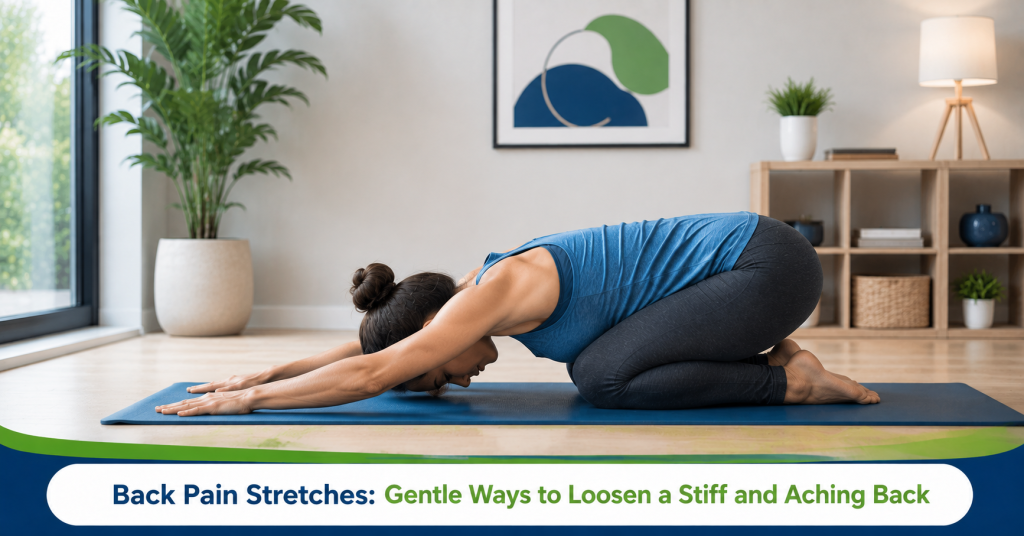
A stiff, aching back doesn’t always need treatment right away; sometimes it just needs the right movement. Simple, targeted back pain stretches can loosen tight muscles, improve mobility, and take the edge off discomfort without any special equipment or experience. At Meade Chiropractic, we often recommend a short stretching routine as an easy first step for everyday stiffness, alongside more comprehensive care when needed.
Let’s go through several gentle stretches worth adding to your routine, and a few tips to get the most out of them.
Why Stretching Helps a Stiff, Aching Back
Stiffness often comes from tight muscles restricting normal movement, whether from prolonged sitting, sleeping in an awkward position, or general tension buildup. Gentle stretching helps lengthen those tight muscles, improve blood flow to the area, and restore a fuller range of motion, often providing noticeable relief within minutes.
A Few Tips Before You Start
Move slowly and stop well before you feel sharp pain; mild tension is the goal, not intense discomfort. Warming up with a few minutes of light movement, like walking in place, can also make stretches more effective and comfortable.
Gentle Back Pain Stretches to Loosen a Stiff, Aching Back
Standing Backbend
Standing with hands supporting your lower back, gently lean backward a few inches, holding briefly. This simple movement counteracts hours of forward-leaning posture and can quickly ease tightness in the lower back.
Doorway Chest Stretch
Standing in a doorway with forearms against the frame, gently lean forward until you feel a stretch across your chest and shoulders. Tightness in this area often contributes to compensatory tension in the upper back.
Seated Figure-4 Stretch
Sitting in a chair, cross one ankle over the opposite knee and gently lean forward. This stretch targets the piriformis muscle deep in the hip, which can contribute to lower back and hip tightness when tense.
Lying Knee Rocking
Lying on your back with knees bent and feet flat, gently rock both knees side to side in a small, controlled motion. This movement helps release tension throughout the lower back and improves spinal mobility.
Standing Quad Stretch
Holding onto a wall or chair for balance, gently pull one heel toward your glutes, keeping your knees close together. Tight quadriceps can pull on the pelvis, indirectly contributing to lower back strain.
Towel-Assisted Hamstring Stretch
Lying on your back, loop a towel around one foot and gently straighten that leg toward the ceiling. Tight hamstrings are a common, often overlooked contributor to lower back tightness.
Side-Lying Rotation Stretch
Lying on your side with knees bent, gently rotate your top arm and upper body backward while keeping your hips still, then switch sides. This stretch targets rotational mobility in the mid and upper back.
Standing Calf and Achilles Stretch
Standing with one foot forward and the other extended back, gently lean into a wall while keeping your back heel on the ground. Tight calves can subtly affect posture and gait, indirectly contributing to compensatory tension in the lower back.
How Often to Stretch for Best Results
A short routine of five to ten minutes, done most days of the week, tends to provide more consistent relief than occasional, longer sessions. Many people find it helpful to stretch first thing in the morning to ease overnight stiffness, or in the evening to release tension built up during the day.
Pairing your stretches with a few slow, deep breaths can also make a noticeable difference. As you settle into each position, try exhaling slowly to allow the muscle to release a bit further, rather than forcing the stretch with tension held in your breath.
Common Mistakes People Make When Stretching for Back Pain
- Bouncing into a stretch rather than easing in slowly. Controlled, steady movement is safer and more effective than jerky motion.
- Holding your breath during a stretch. Steady breathing helps muscles relax more fully.
- Stretching only when pain is already severe. Regular, preventive stretching tends to work better than reactive stretching during a flare-up.
- Ignoring one side of the body. If tightness is more noticeable on one side, spend a bit more time there rather than treating both sides identically.
- Pushing through sharp pain. Mild tension is expected; sharp pain is a signal to ease off immediately.
When Stretching Alone Isn’t Enough
If stiffness and aching persist despite consistent stretching, or if pain is accompanied by numbness, tingling, or noticeable weakness, it’s worth having your spine evaluated. Stretching addresses muscle tightness well, but it won’t resolve an underlying misalignment or structural issue on its own.
How Chiropractic Care Complements a Stretching Routine
Stretching loosens tight muscles, but lasting relief often requires addressing the spine’s underlying alignment as well. Through spinal manipulation, a chiropractor can correct misalignments contributing to chronic stiffness, while personalized posture exercises and stretches build on the foundation covered here. If you’re interested in a more structured, yoga-based approach, our guide to back pain yoga stretches offers a complementary routine worth exploring.
Dr. Brandon Meade works with patients throughout Florence, Alexandria, and Newport, KY, along with Southgate and Taylor Mill, helping people build simple, effective stretching habits alongside proper chiropractic care for lasting relief from a stiff, aching back.
Frequently Asked Questions
How quickly can back pain stretches relieve stiffness?
Many people notice some relief within minutes of gentle stretching, though consistent daily practice tends to provide more lasting improvement over time.
Are these stretches safe for someone with chronic lower back pain?
Generally yes, when done gently and within a comfortable range of motion, though it’s worth checking with a doctor or chiropractor if you have a diagnosed condition.
Should I stretch before or after physical activity to prevent back pain?
Both can help. Gentle stretching before activity prepares your muscles for movement, while stretching afterward can help ease tension that built up during the activity.
Can tight hamstrings really cause lower back pain?
Yes. Tight hamstrings can pull on the pelvis and alter its position, placing additional strain on the lower back over time.
Is it normal for one side of my back to feel tighter during these stretches?
Yes, this is common and often reflects everyday habits or muscle imbalances. Spending extra time stretching the tighter side can help address this over time.
How do I know if I need more than stretching to address my back pain?
If stiffness persists despite consistent stretching, or comes with numbness, tingling, or weakness, it’s a sign to seek a professional evaluation rather than relying on stretching alone.
Contact Meade Chiropractic
Florence, KY Chiropractic Office
Call: 859-640-6770
Highland Heights, KY Chiropractic Office
Call: 859-441-8181
Visit: Meade Chiropractic
Final Thoughts
Back pain stretches offer a simple, accessible way to ease stiffness and improve mobility in just a few minutes a day. While they won’t resolve every underlying issue, consistent, gentle stretching is often the easiest first step toward feeling more comfortable in your own back.
If stiffness and aching continue despite a regular stretching routine, a professional evaluation can help identify what else might be contributing to the discomfort.
Summary
Gentle back pain stretches, including standing backbends, hamstring stretches, and seated figure-4 stretches, help loosen a stiff, aching back by releasing muscle tension and improving mobility. Practiced consistently, these stretches ease discomfort, with chiropractic care recommended for pain linked to underlying alignment issues.