

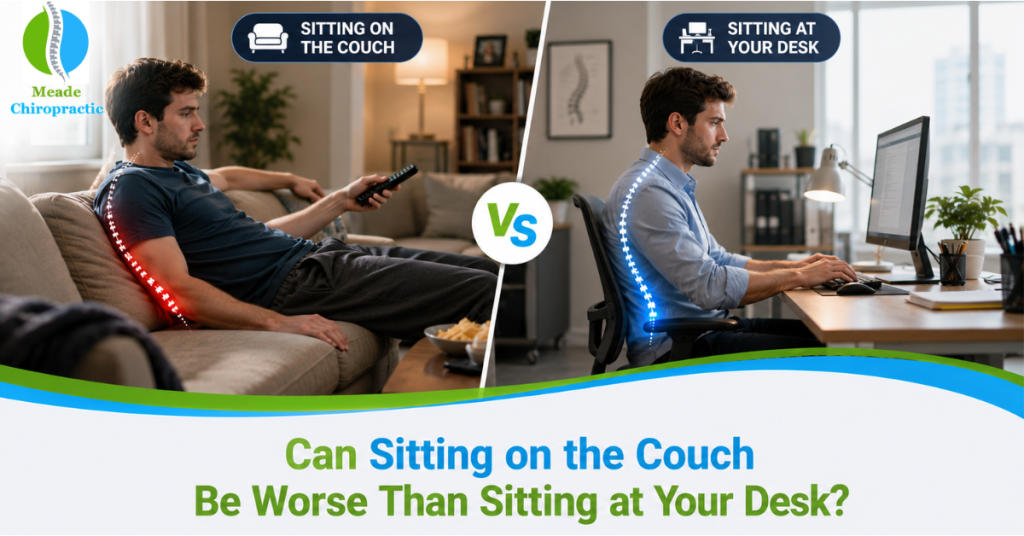
You spend eight hours sitting at your desk, then come home and “relax” by sinking into the couch for another three or four hours. It feels like rest, but is it actually giving your spine a break, or just trading one problem for another? That’s a question we hear a lot at Meade Chiropractic, especially from patients who assume their desk job is the only thing to blame for their back pain.
The truth might surprise you. In some ways, your couch could be doing just as much damage to your spine as your office chair, sometimes more. Let’s break down why.
Why This Question Matters More Than You’d Think
Most people focus their posture awareness on the workday. They buy an ergonomic chair, adjust their monitor height, and maybe even invest in a standing desk. Then they go home and completely undo that effort by sinking into a soft couch for hours with no back support at all. If you’re only correcting posture for half your sitting time, your spine is still absorbing plenty of unnecessary stress.
How Desk Sitting Affects Your Spine
Desk sitting has a well-known set of problems: prolonged pressure on spinal discs, a tendency to slouch as the day goes on, and reduced circulation from staying in one position too long. But a proper desk chair, at least in theory, offers back support, armrests, and adjustable height, all things that can reduce strain when set up correctly.
How Couch Sitting Affects Your Spine
This is where things get interesting. Couches aren’t designed with spinal alignment in mind, they’re designed for comfort in short bursts, not sustained support.
Soft Cushions Offer Zero Structural Support
Deep, soft couch cushions let your hips sink lower than your knees, which rotates your pelvis backward and flattens the natural curve of your lower spine. Unlike a firm desk chair, there’s nothing pushing back to help maintain that curve.
Low Seat Height Forces Awkward Hip Angles
Most couches sit lower than desk chairs, meaning your knees end up higher than your hips when you sit. This position increases pressure on the lower back and can contribute to stiffness over time, especially during long stretches of TV watching or scrolling.
Slouched, Reclined Positions Flatten the Lumbar Curve
Couches practically invite you to slide down into a reclined slouch, especially while watching TV or using your phone. This position rounds the lower back and puts sustained, uneven pressure on the spinal discs, often for far longer than you’d ever slouch at a desk before adjusting.
Lack of Armrests and Back Support Leads to Twisting
Sitting sideways with your legs tucked under you, leaning on one armrest, or curling into a corner of the couch might feel comfortable in the moment, but these asymmetrical positions place uneven strain on the spine and surrounding muscles.
Desk vs Couch: Which Is Actually Worse for Your Back?
The honest answer is that it depends on how you sit in each, but couch sitting often loses simply because there’s no structure encouraging good posture. A desk chair at least gives you something to correct against. A couch offers no resistance, so your body naturally drifts into whatever position feels easiest, which is rarely the position that’s best for your spine. Combined with the fact that couch time often stretches on for hours without a single posture check, it’s easy for evening “relaxation” to undo a well-postured workday entirely.
Common Mistakes People Make While Relaxing on the Couch
- Assuming relaxing can’t hurt your back. Comfort and spinal support aren’t the same thing.
- Sitting in the same position for hours. Marathon TV or gaming sessions without movement breaks add up.
- Slouching with your neck craned forward to look at a phone or laptop while lounging.
- Sitting cross-legged or with legs tucked under you for extended periods, which twists the spine and pelvis.
- Skipping any back support entirely, treating cushions as decoration rather than posture tools.
Practical Tips for Healthier Couch Sitting
Use Lumbar Support Pillows
A firm cushion placed behind your lower back can help maintain your spine’s natural curve, even on a soft couch. It’s a small addition that makes a real difference over hours of sitting.
Change Positions Often
Shifting position every 20 to 30 minutes, even slightly, prevents any single area of your spine from bearing constant, uneven pressure.
Sit Upright When Possible
Reserve fully reclined, sunken positions for short breaks rather than hours-long sessions. Sitting more upright, especially while using your phone or laptop, reduces strain on your neck and lower back.
Set a Timer for Movement Breaks
Just like at a desk, standing up and walking around every hour helps your spinal discs decompress and keeps surrounding muscles from stiffening.
When Couch Habits Signal a Bigger Problem
Occasional stiffness after a long movie marathon is normal. But if you notice pain that consistently shows up after evening couch time, discomfort that radiates into your hips or legs, or stiffness that lingers well into the next day, it’s worth paying closer attention. These patterns often point to cumulative strain rather than a single cause, and they tend to get worse, not better, without some kind of intervention.
How Chiropractic Care Can Help
If your back pain doesn’t seem to match up with just your desk job, your evening habits might be part of the picture. Chiropractic care can help identify exactly where the imbalance is coming from, whether it’s desk posture, couch posture, or a combination of both, and correct it through spinal manipulation, targeted low back pain relief, and posture exercises and stretches designed to retrain how your body holds itself throughout the day.
Dr. Brandon Meade works with patients across Florence, Highland Heights, and KY, helping them connect the dots between all the different ways they sit each day, not just at their desks, so they can address the full picture rather than just one piece of it.
Frequently Asked Questions
Is sitting on the couch really worse than sitting at a desk?
It can be, mainly because couches offer little structural support and encourage slouched, reclined positions for extended periods, often longer than people slouch at a desk before adjusting.
How can I make my couch more back-friendly?
Adding a firm lumbar cushion, sitting more upright, and changing positions regularly can significantly reduce the strain couch sitting places on your spine.
Does it matter if I sit cross-legged on the couch?
Yes. Sitting cross-legged or with your legs tucked under you for long periods can twist the pelvis and spine unevenly, contributing to stiffness and imbalance over time.
How often should I get up while relaxing on the couch?
Aim to change position or stand up briefly every 20 to 30 minutes, similar to the movement breaks recommended for desk work.
Can a chiropractor tell if my pain is from my desk or my couch?
Yes. A chiropractor can assess your posture patterns and movement habits to identify which parts of your day are contributing most to your pain, and build a plan that addresses all of them.
Contact Meade Chiropractic
Florence KY Chiropractic Office
Call: 859-640-6770
Highland Heights KY Chiropractic Office
Call: 859-441-8181
Final Thoughts
Your desk chair might get all the ergonomic attention, but your couch deserves a second look too. Soft cushions, low seat heights, and hours of reclined slouching can quietly undo a well-postured workday, leaving your spine dealing with strain from both ends of your day.
The fix isn’t giving up your evening downtime, it’s being a little more intentional about how you sit while you enjoy it. If your back pain doesn’t seem to add up with just your work setup, it might be time to look at the whole picture, couch included.
Summary
Yes, sitting on the couch can be worse than sitting at a desk because soft cushions and low seat heights offer little spinal support, encouraging slouched, reclined postures for hours. Adding lumbar support, sitting upright, and taking movement breaks can help protect the spine during couch time.