

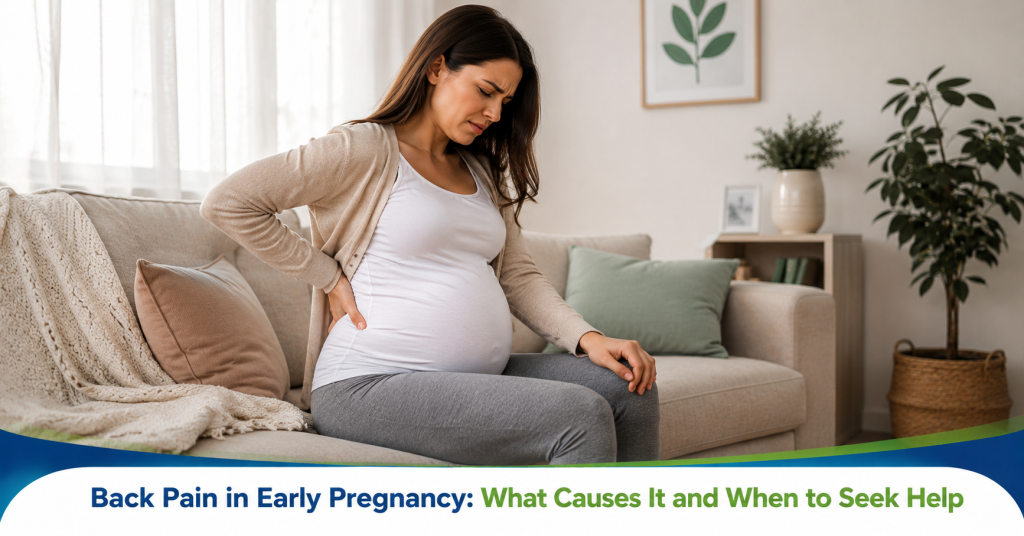
Finding out you’re pregnant comes with a lot of firsts, and for many women, an unexpected ache in the lower back is one of them. Early pregnancy back pain often catches people off guard, since most expect this kind of discomfort later, once there’s a visible bump to blame. At Meade Chiropractic, we hear this question often from expecting mothers who are surprised their back is already bothering them in the first trimester.
Let’s look at what typically causes this early discomfort, what’s considered normal, and when it’s time to reach out to your doctor rather than waiting it out.
Is Back Pain Normal in Early Pregnancy?
Yes, mild to moderate back pain is a common, normal part of early pregnancy for many women. Your body begins changing almost immediately after conception, well before any visible signs appear, and several of those changes can affect your back. That said, “common” doesn’t mean every instance should be ignored, especially if the pain is severe or comes with other symptoms, which we’ll cover further below.
What Causes Back Pain in Early Pregnancy
Hormonal Changes and Ligament Loosening
Early in pregnancy, your body starts producing relaxin, a hormone that loosens ligaments in preparation for later stages of pregnancy and eventual delivery. This loosening can begin affecting the stability of your lower back and pelvis much sooner than most people expect.
Postural Shifts Even Before You’re Showing
Even before there’s a visible bump, subtle shifts in your center of gravity and the way you naturally hold your posture can begin placing new demands on your lower back.
Increased Blood Volume and Fluid Retention
Early pregnancy triggers a significant increase in blood volume and fluid retention, which can contribute to swelling and pressure that sometimes translates into back discomfort.
Stress and Muscle Tension
The emotional and physical adjustment of early pregnancy, combined with fatigue, can increase muscle tension throughout the body, including the back, even without any structural change yet.
Referred Pain from Uterine Changes
As the uterus begins to grow and change, even in the earliest weeks, some women experience referred discomfort that radiates into the lower back rather than being felt only in the abdomen.
When Early Pregnancy Back Pain Is a Sign to Seek Help Right Away
While mild, dull back discomfort is often normal, certain symptoms should never be waited out. Contact your OB-GYN, midwife, or seek immediate medical care if your back pain comes with:
- Sudden, severe, or one-sided sharp pain
- Vaginal bleeding or spotting
- Cramping that feels different from typical mild discomfort
- Fever or chills alongside the pain
- Pain or burning with urination, which can indicate a urinary tract or kidney infection
- Dizziness, fainting, or shoulder pain alongside abdominal or back pain
These symptoms can sometimes point to more serious conditions, including ectopic pregnancy or infection, and always warrant prompt medical evaluation rather than home management.
How Early Pregnancy Back Pain Typically Differs From Later Pregnancy Back Pain
It’s worth knowing that back pain in early pregnancy often has different underlying causes than the back pain many women experience in the third trimester. Later pregnancy back pain is frequently tied to the added weight and shifted center of gravity from a growing belly, something that simply hasn’t happened yet in the first trimester. Early pregnancy back pain, by contrast, tends to stem more from hormonal shifts, fatigue, and subtle postural changes. Understanding this distinction can help you and your provider narrow down what’s actually contributing to your discomfort at this particular stage.
Common Mistakes Expecting Mothers Make With Early Pregnancy Back Pain
- Assuming all back pain is automatically pregnancy-related. Some causes still need medical evaluation, especially if symptoms are severe or unusual.
- Waiting too long to mention it to their provider. Even mild, ongoing discomfort is worth discussing at your next appointment.
- Taking pain relief medication without checking first. Not all pain relievers are considered safe during pregnancy, so it’s important to consult your OB before taking anything.
- Ignoring posture changes early on. Small postural adjustments made early can help prevent worsening discomfort as pregnancy progresses.
- Assuming nothing can be done until later in pregnancy. Safe, supportive care options exist even in the first trimester.
Practical, Safe Tips to Manage Everyday Early Pregnancy Back Pain
- Maintain good posture while sitting, especially if you work at a desk for long periods
- Use a supportive pillow between your knees while sleeping on your side
- Stay gently active with pregnancy-safe movement, as approved by your provider
- Avoid standing or sitting in one position for extended periods
- Wear supportive, comfortable footwear rather than unsupportive shoes
Can Chiropractic Care Help With Early Pregnancy Back Pain?
Many women safely receive chiropractic care throughout pregnancy, including the early stages, using techniques specifically adapted to accommodate a pregnant body. Chiropractic care can help address the postural shifts and ligament changes contributing to back pain, often through gentle, pregnancy-appropriate spinal manipulation and posture exercises and stretches tailored to each trimester.
That said, it’s important to get clearance from your OB-GYN or midwife before beginning chiropractic care during pregnancy, and to choose a provider experienced in working with pregnant patients. If you’re considering this option, it’s worth asking directly about a provider’s experience with prenatal care when scheduling your evaluation.
Serving Florence, Newport, Independence & Southgate
Dr. Brandon Meade works with patients throughout Florence, Newport, and Independence, KY, along with Southgate and the broader Union, KY area, helping expecting mothers navigate the physical changes of pregnancy with informed, careful guidance.
Frequently Asked Questions
How early in pregnancy can back pain start?
For some women, mild back discomfort can begin within the first few weeks of pregnancy, largely due to early hormonal changes like increased relaxin production.
Is it safe to see a chiropractor during early pregnancy?
For many women, yes, with clearance from their OB-GYN or midwife and a provider experienced in prenatal care using techniques appropriate for early pregnancy.
Does early pregnancy back pain mean something is wrong with the baby?
Not typically. Mild back discomfort is common and usually unrelated to fetal health, but severe or unusual symptoms should always be evaluated by your provider.
Can stress cause back pain in early pregnancy even without physical changes?
Yes. The emotional and physical adjustment of early pregnancy can increase muscle tension throughout the body, including the back, independent of structural changes.
What over-the-counter pain relief is safe for back pain during early pregnancy?
This varies and should always be confirmed with your OB-GYN or midwife before taking anything, since not all pain relievers are considered safe during pregnancy.
When should I worry about back pain in early pregnancy?
Seek prompt medical attention if back pain is severe, one-sided, or accompanied by bleeding, fever, cramping, or pain with urination.
Contact Meade Chiropractic
Florence, KY Chiropractic Office
Call: 859-640-6770
Highland Heights, KY Chiropractic Office
Call: 859-441-8181
Visit: Meade Chiropractic
Final Thoughts
Early pregnancy back pain is often a normal, if unexpected, part of the early changes your body goes through. Understanding what’s typical, and knowing which symptoms warrant a call to your provider, can help you feel more confident navigating this stage.
If back pain has been part of your early pregnancy experience, talking with your OB-GYN or midwife about safe management options, including whether chiropractic care might be appropriate for you, is a good next step.
Summary
Back pain in early pregnancy is often caused by hormonal changes, ligament loosening, postural shifts, and increased blood volume, and is generally normal. However, severe, one-sided, or sudden pain, especially with bleeding, fever, or cramping, warrants immediate medical attention from an OB-GYN or midwife.