

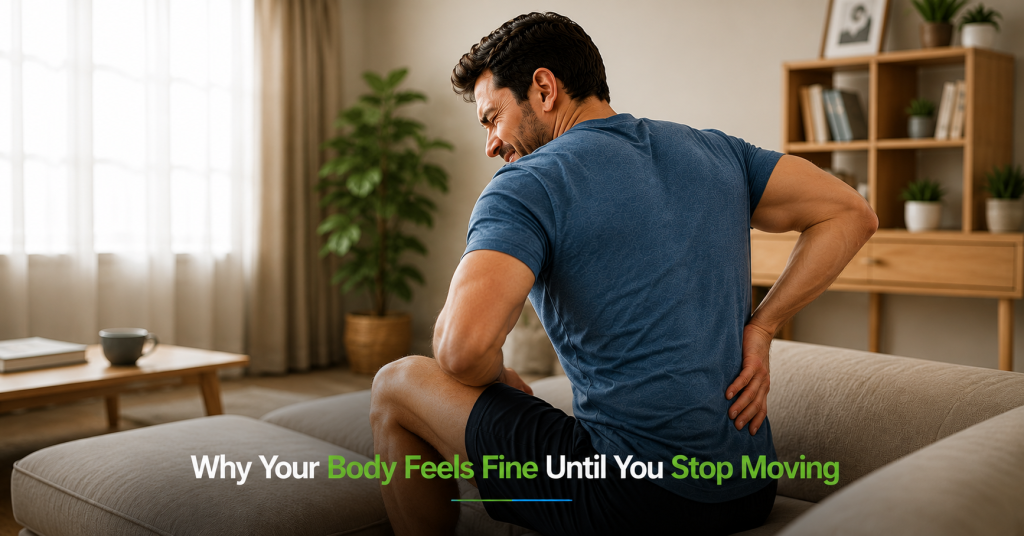
You spend the whole afternoon working in the yard, feeling totally fine. Then you sit down for dinner, and suddenly your lower back seizes up. Or you finish a long work shift on your feet with no complaints, only to feel stiff and achy the second you finally sit on the couch. It’s a strange pattern, and it’s one we hear about constantly at Meade Chiropractic patients who feel completely fine while they’re active, only to be hit with pain the moment they stop.
This isn’t random, and it isn’t “just getting older.” There’s a real physiological reason your body seems to hide pain during movement and then reveal it the second you rest. Let’s break down exactly why this happens.
Why Movement Seems to “Hide” Pain
Endorphins and Adrenaline Mask Discomfort During Activity
When you’re active, your body releases endorphins and adrenaline, natural chemicals that reduce your perception of pain. This is part of why you can push through a workout or a long task without noticing discomfort that becomes very obvious once you slow down and those chemicals fade.
Movement Keeps Joint Fluid Circulating
Your joints rely on synovial fluid for lubrication, and movement helps keep that fluid circulating. While you’re active, this constant motion reduces friction and stiffness. The moment you stop, circulation slows, and stiffness can set in relatively quickly.
Muscles Warm Up and Become More Flexible With Use
Muscles behave differently when they’re warm. Activity increases blood flow and temperature in the muscles you’re using, which improves flexibility and reduces tension. Once you stop moving, muscles cool down and naturally tighten again, sometimes more than they were before you started.
What Happens When You Stop Moving
Inflammation Settles Into the Area
Any minor irritation or micro-strain that occurred during activity doesn’t necessarily hurt while you’re still moving, since movement keeps blood flow high and inflammation somewhat suppressed. Once you stop, inflammatory chemicals have a chance to settle into the area, which is often when pain becomes noticeable.
Joints Stiffen Without Circulation
Without ongoing movement, joint fluid thickens and circulation slows, a pattern sometimes called the “gel phenomenon.” This is the same mechanism behind morning stiffness after a night of sleep, and it applies just as easily after a few hours of sitting following activity.
Muscles Cool Down and Tighten
As muscles cool, they naturally contract and lose some of the flexibility they had while warm and active. If those muscles were already under strain during your activity, this tightening can translate directly into noticeable soreness or stiffness.
Your Nervous System “Notices” the Pain Again
Once the adrenaline and endorphins from activity fade, your nervous system essentially goes back to normal pain-sensing mode. Discomfort that was there all along, just masked, becomes fully noticeable once that natural buffer wears off.
Common Situations Where This Pattern Shows Up
- Feeling fine during a full workday on your feet, then stiff the moment you sit down at home
- No pain during a workout, but significant soreness an hour or two later
- Feeling okay throughout a long drive, then struggling to stand up straight once you finally stop
- Waking up stiff after a very active day, even though you felt fine the entire time you were active
- Gardening, cleaning, or physical chores that feel manageable in the moment but lead to stiffness that evening
Is This Normal or a Sign of Something More Serious?
Some degree of post-activity stiffness is a completely normal physiological response. But there are patterns worth paying closer attention to. If the stiffness is getting progressively worse over time, lingers for days rather than hours, or is starting to happen after less and less activity, that often points to an underlying issue rather than simple, expected fatigue. Conditions like arthritis, disc irritation, or spinal misalignment can all make this rebound stiffness more intense and more frequent than it should be.
Common Mistakes People Make With This Pattern
- Assuming feeling fine during activity means everything is okay. The absence of pain while moving doesn’t always mean there’s no underlying strain happening.
- Pushing through activity without any breaks. Continuous strain without rest increases the amount of inflammation and tension waiting to surface once you stop.
- Going from fully active to fully sedentary too quickly. Abruptly stopping, rather than easing out of activity, can make the transition harder on your muscles and joints.
- Ignoring a worsening pattern. If post-activity stiffness has been getting more intense or more frequent, treating it as “normal” can delay addressing a real underlying cause.
- Resting completely instead of moving gently. Total inactivity after stiffness sets in often makes things worse rather than better.
Practical Tips to Reduce Post-Activity Stiffness
Cool Down Instead of Stopping Abruptly
Give your body a few minutes to transition, some light walking or gentle stretching after activity helps ease the shift rather than going from full motion to complete stillness.
Stretch Before You Sit or Rest
A few minutes of stretching right after activity, while your muscles are still warm, can meaningfully reduce the stiffness that shows up later.
Stay Consistently Active Rather Than “All or Nothing”
Frequent, moderate movement throughout the week tends to cause less rebound stiffness than long stretches of inactivity followed by intense bursts of activity.
Support Your Body During Rest
Using proper seating support, a supportive mattress, or a cushion that maintains good posture during rest periods can reduce how much stiffness builds up once you do stop moving.
When to See a Chiropractor
If this pattern has become a regular, worsening part of your routine, especially if the stiffness lingers longer than it used to or starts limiting your movement the next day, it’s worth getting evaluated. This kind of rebound pain is often very treatable once the underlying cause, whether it’s joint restriction, muscle imbalance, or spinal misalignment, is properly identified.
How Chiropractic Care Helps Break the Cycle
Chiropractic care can help by identifying what’s actually happening beneath the surface, since the “fine during activity, stiff afterward” pattern often points to an underlying issue that pain-masking chemicals are simply covering up during movement. Through spinal manipulation, a chiropractor can address joint restrictions contributing to the stiffness, while low back pain relief techniques target the areas most affected by this rebound pattern. For many patients, ongoing posture exercises and stretches also help reduce how much strain builds up in the first place, addressing the pattern before it has a chance to worsen the way we discussed in our post on how small spine problems quietly turn into chronic pain.
Dr. Brandon Meade works with patients throughout Erlanger, Elsmere, and Alexandria, KY, helping active people understand why their bodies feel fine one moment and stiff the next, and building a plan to break that cycle for good.
Frequently Asked Questions
Why do I feel fine during exercise but sore afterward?
Activity releases endorphins and adrenaline that temporarily mask discomfort. Once those chemicals fade after you stop, any underlying strain or inflammation becomes noticeable.
Is it normal to feel stiff after sitting down following a busy day?
Mild stiffness is common and generally normal. If it’s severe, lasts a long time, or has been getting worse, it’s worth having evaluated.
Does this pattern mean I have arthritis?
Not necessarily, but arthritis is one condition that can intensify this rebound stiffness pattern. A proper evaluation can help determine the actual cause.
How can I prevent stiffness after physical activity?
Cooling down gradually, stretching while still warm, and staying consistently active rather than alternating between inactivity and intense bursts can all help reduce post-activity stiffness.
Should I keep pushing through activity if I don’t feel pain?
Not necessarily. The absence of pain during activity doesn’t always mean there’s no strain occurring, since your body’s natural pain-masking response can hide it temporarily.
Contact Meade Chiropractic
Florence KY Chiropractic Office
Call: 859-640-6770
Highland Heights KY Chiropractic Office
Call: 859-441-8181
Final Thoughts
Feeling fine during activity, only to be hit with stiffness the moment you stop, isn’t a coincidence or a sign of getting older. It’s a predictable physiological pattern involving inflammation, circulation, and your body’s natural pain-masking response. Understanding why it happens is the first step toward addressing it, rather than just accepting it as inevitable.
If this cycle has become a regular part of your routine, it’s worth looking deeper into what’s actually happening beneath the surface, before it becomes a bigger, more persistent problem.
Summary
The body often feels fine during activity because endorphins and adrenaline mask discomfort, and movement keeps joints and muscles warm and flexible. Once you stop, inflammation settles in, joints stiffen, and muscles cool, revealing pain that was masked all along. Gradual cool-downs and chiropractic care can help reduce this rebound stiffness.