

You don’t need a gym membership or special equipment to start addressing back pain. A handful of simple, effective back pain exercises at home can make a real difference in both strength and mobility, often more than people expect. At Meade Chiropractic, we regularly recommend home-based exercises as part of a complete approach to back pain, since consistency tends to matter more than intensity.
Let’s go through why these exercises work, which ones are worth adding to your routine, and how to avoid common mistakes along the way.
Why Home Exercises Can Be Effective for Back Pain
Much of what contributes to back pain — weak core muscles, tight hips, poor postural habits — can be directly addressed through simple, targeted movement. You don’t need specialized equipment to build the strength and flexibility your spine needs; you need consistency and proper form, both of which are entirely achievable at home.
Before You Start: Basic Safety Guidelines
If you have a diagnosed spinal condition, a recent injury, or pain that’s severe or worsening, check with a doctor or chiropractor before beginning a new exercise routine. For general, mild to moderate back discomfort, the exercises below are widely considered safe, but you should always stop if a movement causes sharp pain rather than mild, expected effort.
Back Pain Exercises at Home for Strength and Mobility
Cat-Cow Stretch
On hands and knees, alternate between arching your back upward and dipping it downward. This gentle flow mobilizes your entire spine and is a great way to start any back exercise routine.
Bird Dog
From a hands-and-knees position, extend one arm forward and the opposite leg back, holding briefly before switching sides. This exercise builds core stability while training balance and coordination.
Glute Bridge
Lying on your back with knees bent, lift your hips toward the ceiling by engaging your glutes, then lower back down. Strong glutes take pressure off your lower back during everyday movement.
Pelvic Tilts
Lying on your back with knees bent, gently flatten your lower back against the floor using your abdominal muscles, then release. This foundational movement builds core awareness and control.
Child’s Pose
Sitting back onto your heels with arms extended forward, this resting stretch gently elongates the lower back and can relieve tension after a long day of sitting or activity.
Plank (Modified or Full)
Holding a plank position, either on your forearms or hands, builds overall core strength, which plays a central role in supporting your spine during daily movement.
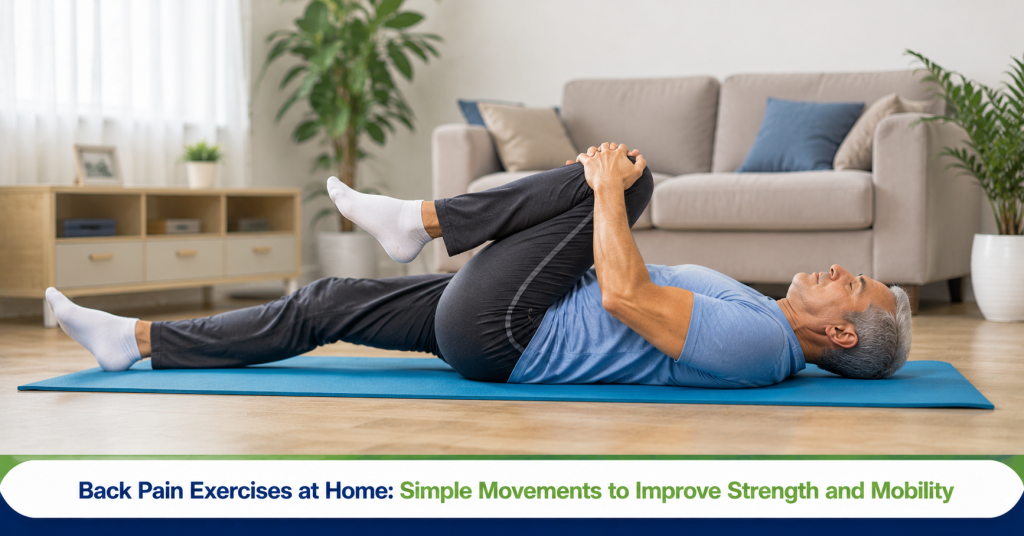
Knee-to-Chest Stretch
Lying on your back, gently pull one knee toward your chest, hold, then switch legs. This stretch helps relieve tension in the lower back and improves hip flexibility.
Superman Hold
Lying face down, gently lift your arms, chest, and legs slightly off the floor at the same time, hold briefly, then lower back down. This exercise strengthens the muscles along your entire spine, which play a key role in maintaining good posture throughout the day.
Seated Forward Fold
Sitting with legs extended, gently reach toward your feet while keeping your back as straight as possible, going only as far as comfortable. This stretch targets the hamstrings and lower back, two areas that are often tight in people dealing with chronic back discomfort.
How These Exercises Build Long-Term Back Strength
Individually, these movements are simple. Done consistently, they work together to strengthen your core, glutes, and back muscles while improving spinal mobility, addressing many of the underlying contributors to chronic back pain rather than just the symptoms. Over weeks of regular practice, many people notice reduced stiffness, fewer flare-ups, and better overall movement.
Common Mistakes People Make With At-Home Back Exercises
- Skipping warm-up movement before more demanding exercises. Jumping straight into planks or bridges without any warm-up increases the risk of strain.
- Doing too much too quickly. Starting with high repetitions or advanced variations can trigger discomfort rather than build strength.
- Ignoring proper form for the sake of speed. Rushing through movements, especially bird dog and planks, reduces their effectiveness and increases injury risk.
- Only doing exercises when pain flares up. Consistency, not just reactive effort, is what builds lasting strength and mobility.
- Pushing through sharp pain. Mild effort or stretching sensation is expected; sharp or worsening pain is a signal to stop and reassess.
When At-Home Exercises Aren’t Enough
If you’ve been consistent with a home exercise routine for several weeks without meaningful improvement, or if pain is worsening rather than easing, it’s a sign that something beyond muscle weakness or tightness may be contributing, like a spinal misalignment or disc issue that requires professional evaluation.
How Chiropractic Care Complements At-Home Exercise
Home exercises build strength and mobility, but they work best alongside proper spinal alignment. Through spinal manipulation, a chiropractor can correct misalignments that exercise alone can’t resolve, while personalized posture exercises and stretches can be tailored specifically to your body’s needs rather than a general routine. If you’re looking for gentler options suited to an older adult, our post on back pain exercises for seniors covers modifications worth considering.
Dr. Brandon Meade works with patients throughout Latonia, Taylor Mill, and Southgate, KY, along with Newport and Fort Thomas, helping people build effective home exercise routines alongside proper chiropractic care for lasting back pain relief.
Frequently Asked Questions
How often should I do back pain exercises at home?
Most people benefit from doing these exercises three to five times per week, though consistency matters more than doing them every single day.
Can back pain exercises at home replace seeing a chiropractor?
For mild, muscle-related discomfort, home exercises can help significantly, but persistent or worsening pain often benefits from a professional evaluation to rule out an underlying alignment issue.
What should I do if an exercise makes my back pain worse?
Stop the exercise immediately and avoid pushing through sharp or worsening pain. If discomfort continues, consult a doctor or chiropractor before resuming.
How long does it take to see results from at-home back exercises?
Many people notice improved mobility and reduced stiffness within two to four weeks of consistent practice, though timelines vary by individual.
Are these exercises safe for someone with a herniated disc?
Some may be appropriate, but it’s important to get personalized guidance from a healthcare provider before exercising with a diagnosed disc issue.
Do I need any equipment for these back pain exercises at home?
No special equipment is required. A mat or comfortable floor space is generally all you need for this routine.
Contact Meade Chiropractic
Florence, KY Chiropractic Office
Call: 859-640-6770
Highland Heights, KY Chiropractic Office
Call: 859-441-8181
Visit: Meade Chiropractic
Final Thoughts
Back pain exercises at home offer a simple, accessible way to build strength, improve mobility, and reduce discomfort, without needing a gym or special equipment. The key is consistency and proper form, done regularly rather than only during a flare-up.
If home exercises alone haven’t fully resolved your back pain, pairing them with a professional evaluation can help identify what else might be contributing to the discomfort.
Summary
Simple back pain exercises at home, such as cat-cow stretches, bird dogs, glute bridges, and planks, help build core strength and improve spinal mobility. Practiced consistently, these movements can reduce back pain and stiffness, with chiropractic care recommended for more persistent or worsening symptoms.