

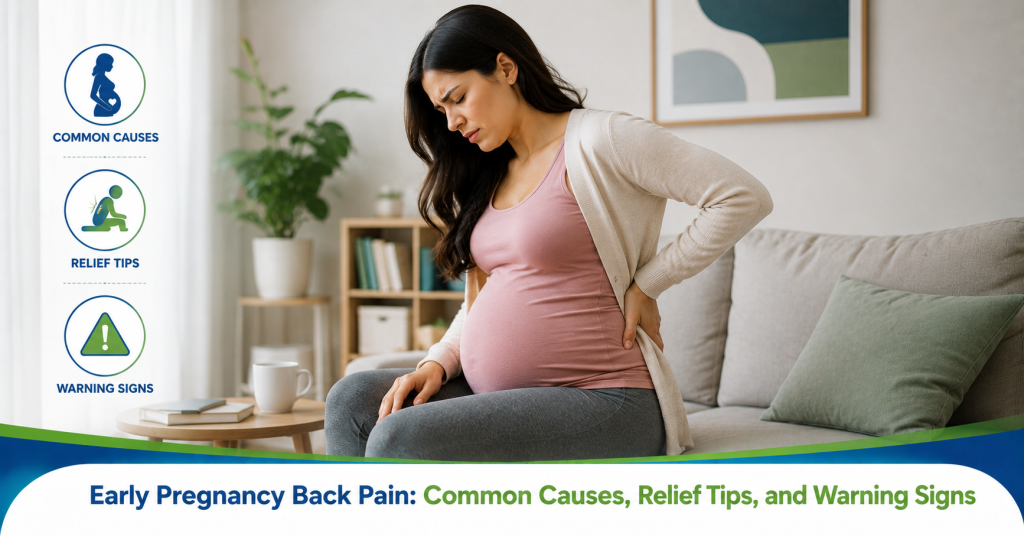
If you’re dealing with early pregnancy back pain, you’re likely looking for two things: practical ways to actually feel better, and a clear sense of which symptoms deserve a call to your doctor rather than a stretch and some rest. At Meade Chiropractic, we hear both of these questions constantly from expecting mothers navigating discomfort they didn’t expect this early. This guide focuses on exactly that: relief strategies you can use today and a clear warning-sign checklist to keep in mind.
If you’re also curious about the full explanation of why this happens in the first place, our detailed post on the causes behind early pregnancy back pain covers that in depth. Here, we’ll keep the causes brief and spend most of our time on relief and safety.
A Quick Look at What Causes Early Pregnancy Back Pain
In short, early pregnancy back pain is usually driven by a combination of factors:
- Rising relaxin hormone levels, which begin loosening ligaments well before the third trimester
- Subtle shifts in posture and center of gravity, even before any visible bump
- Increased blood volume and fluid retention
- Fatigue and stress-related muscle tension
- Referred discomfort from early uterine changes
For a full breakdown of each of these, our companion post on early pregnancy back pain causes goes into much more detail.
Relief Tips for Early Pregnancy Back Pain
Supportive Sleep Positions
Sleeping on your side with a pillow between your knees helps keep your spine and pelvis better aligned overnight, reducing morning stiffness that many women notice even in the first trimester.
Gentle, Pregnancy-Safe Movement
Light walking or gentle stretching, as approved by your provider, helps maintain circulation and flexibility without placing excessive strain on your back.
Posture Awareness While Sitting and Standing
Being mindful of slouching, especially during long periods of sitting, can meaningfully reduce the added strain on your lower back during early pregnancy.
Warm (Not Hot) Compresses
A warm compress applied to tight or achy areas of the back can help ease muscle tension. Avoid very hot temperatures, and check with your provider about safe use during pregnancy.
Supportive Footwear
Switching to supportive, low-heeled shoes helps maintain better alignment through your legs and lower back as your body begins adjusting to pregnancy-related changes.
Prenatal-Safe Stretching
Gentle stretches focused on the hips and lower back, approved by your provider, can relieve some of the tension contributing to early pregnancy discomfort.
Warning Signs: When Early Pregnancy Back Pain Needs Medical Attention
Most early pregnancy back pain is mild and manageable, but certain signs should never be self-managed. Contact your OB-GYN, midwife, or seek immediate care if you experience:
- Sudden, severe, or sharp one-sided pain
- Vaginal bleeding or spotting, even if light
- Cramping that feels different or more intense than typical mild discomfort
- Fever, chills, or feeling generally unwell alongside the pain
- Pain or burning during urination
- Dizziness, fainting, or pain radiating into the shoulder
- Back pain that’s rapidly worsening rather than staying steady or mild
Any of these symptoms warrant prompt medical evaluation rather than waiting to see if they improve on their own.
Common Mistakes to Avoid With Early Pregnancy Back Pain
- Taking pain medication without checking first. Always confirm with your OB-GYN before taking anything for pain relief during pregnancy.
- Dismissing pain as “just pregnancy” without evaluation. Some causes still warrant medical attention, even early on.
- Ignoring posture until pain becomes severe. Small adjustments made early can help prevent worsening discomfort later in pregnancy.
- Overexerting during “good” days. Pushing through activity on days you feel better can sometimes trigger a setback.
- Waiting to mention mild, ongoing pain at appointments. Even minor discomfort is worth bringing up with your provider.
When to Consider Professional Support Beyond Self-Care
If relief strategies at home aren’t making a meaningful difference, or if back pain is becoming a regular, disruptive part of your daily routine, it’s worth discussing additional support options with your OB-GYN or midwife. This may include physical therapy or chiropractic care from a provider experienced in prenatal cases, always with your provider’s clearance first.
Serving Kenton County, Independence & Latonia
Dr. Brandon Meade works with patients throughout Kenton County, Independence, and Latonia, KY, along with Elsmere and Burlington, helping women navigate the physical changes of early pregnancy with informed, careful guidance.
Frequently Asked Questions
What’s the fastest way to relieve early pregnancy back pain at home?
Supportive sleep positions, gentle movement, and posture awareness tend to offer the quickest, safest relief for mild early pregnancy back pain.
Is it normal for back pain to come and go in early pregnancy?
Yes, intermittent mild discomfort is common as your body adjusts. Consistent, worsening, or severe pain is what warrants closer attention.
Can dehydration make early pregnancy back pain worse?
Yes, staying well hydrated supports overall muscle and ligament function, and dehydration can sometimes contribute to increased muscle tension.
Should I avoid all exercise if I have early pregnancy back pain?
Not necessarily. Gentle, provider-approved movement is often encouraged, while high-impact or strenuous activity may need to be modified.
How do I know if my back pain is a warning sign versus normal discomfort?
Sudden, severe, one-sided pain, or pain accompanied by bleeding, fever, or cramping, should always be evaluated promptly rather than assumed to be normal.
Can heat therapy be used safely for early pregnancy back pain?
Warm, not hot, compresses are generally considered safe, but it’s best to confirm specifics with your OB-GYN, especially regarding temperature and duration.
Contact Meade Chiropractic
Florence, KY Chiropractic Office
Call: 859-640-6770
Highland Heights, KY Chiropractic Office
Call: 859-441-8181
Visit: Meade Chiropractic
Final Thoughts
Managing early pregnancy back pain comes down to two things: practical relief strategies you can use day to day, and knowing which symptoms mean it’s time to call your provider. Most discomfort at this stage is manageable, but staying alert to warning signs is just as important as finding relief.
If back pain has become a consistent part of your early pregnancy, talking with your OB-GYN or midwife about safe relief options and any additional support that might help is a good next step.
Summary
Early pregnancy back pain can often be relieved through supportive sleep positions, gentle movement, posture awareness, and warm compresses. However, sudden severe pain, bleeding, fever, or cramping are warning signs that require prompt medical attention from an OB-GYN or midwife rather than home management.