

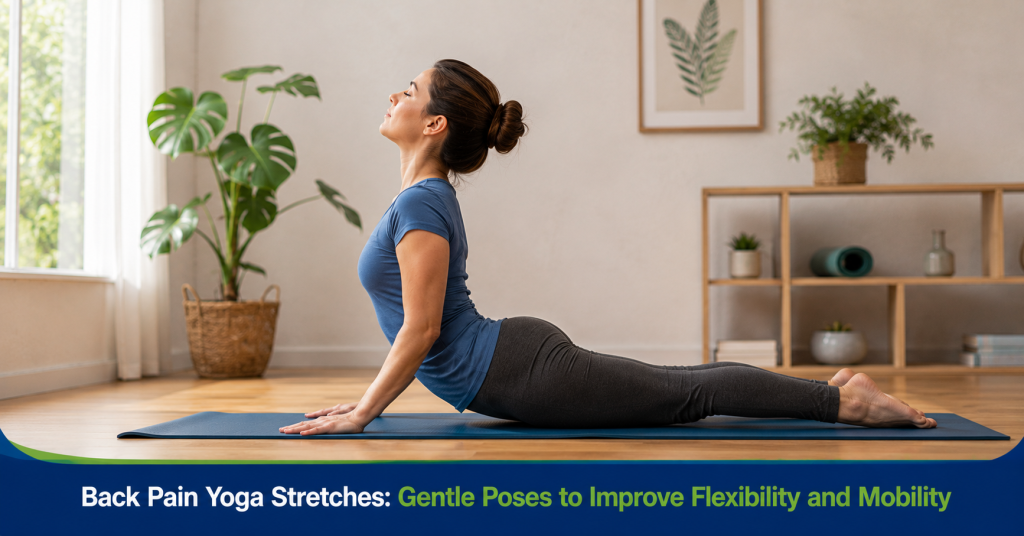
Yoga has a reputation for being calming, but it’s also one of the most effective, low-impact ways to address back pain. The right back pain yoga stretches combine gentle movement, breath, and mindful alignment in a way that targets both flexibility and the muscular support your spine needs. At Meade Chiropractic, we often recommend yoga-based stretching as a complement to treatment, since the slow, controlled nature of these poses works well alongside spinal care.
Let’s go through seven gentle poses worth adding to your routine, along with some guidance on practicing safely.
How Yoga Helps Relieve and Prevent Back Pain
Yoga combines stretching, gentle strengthening, and mindful breathing, a combination that helps release muscle tension, improve spinal mobility, and build the kind of body awareness that naturally supports better posture throughout the day. Unlike more intense forms of exercise, yoga’s slow, controlled movements make it especially accessible for people managing back pain.
Before You Begin: Safety Tips for Yoga With Back Pain
Move slowly and stay within a comfortable range of motion, never forcing a stretch to the point of sharp pain. If you have a diagnosed spinal condition or recent injury, check with your doctor or chiropractor before starting a new yoga routine, and consider working with an instructor experienced in therapeutic or gentle yoga.
7 Gentle Back Pain Yoga Stretches for Better Flexibility and Mobility
1. Child’s Pose
Kneeling with your hips resting back toward your heels and arms extended forward, this resting pose gently stretches the lower back and shoulders while encouraging deep, calming breaths.
2. Cat-Cow Pose
On hands and knees, slowly alternate between arching your back upward and dipping it downward, moving with your breath. This flowing movement warms up the entire spine and is often used to begin a back-focused yoga sequence.
3. Modified Downward-Facing Dog
With hands and feet on the floor and hips lifted into an inverted V shape, keep your knees slightly bent if needed. This pose gently lengthens the spine and stretches the hamstrings and calves, which can indirectly ease lower back tension.
4. Sphinx Pose
Lying on your stomach with forearms on the floor and chest gently lifted, this pose provides a mild backbend that can help counteract the effects of prolonged sitting and forward-leaning posture.
5. Supine Spinal Twist
Lying on your back with knees bent, gently guide both knees to one side while keeping your shoulders grounded, then switch sides. This gentle rotation helps release tension along the length of the spine.
6. Thread the Needle
From hands and knees, slide one arm underneath your body, resting your shoulder and head on the floor. This pose gently stretches the upper back and shoulders, areas that often hold tension contributing to overall back discomfort.
7. Legs-Up-the-Wall Pose
Lying on your back with legs extended up a wall, this deeply restorative pose relieves pressure on the lower back and promotes relaxation, making it a great way to end a stretching session.
How Often Should You Practice These Stretches
Many people find benefit from practicing these stretches three to five times a week, though even a short daily routine of two or three poses can help maintain flexibility and reduce stiffness over time. Consistency tends to matter more than the length of each session.
Combining Breath With Movement for Better Results
One thing that sets yoga apart from general stretching is the deliberate focus on breath. Slow, steady inhales and exhales, paired with movement into and out of each pose, help your nervous system relax and allow muscles to release tension more fully than rushed or held-breath stretching typically does. As you move through these poses, try inhaling as you lengthen or open your body, and exhaling as you fold or release deeper into a stretch. This small adjustment often makes a noticeable difference in how effective each pose feels.
Common Mistakes to Avoid With Back Pain Yoga
- Forcing a stretch too far, too fast. Yoga should feel like gentle effort, not sharp discomfort. Ease into each pose gradually.
- Holding your breath during poses. Steady, natural breathing helps muscles relax more fully into each stretch.
- Skipping the gentler poses to get to more advanced ones. Building a foundation with basic poses supports safer progress over time.
- Practicing on a hard, unsupportive surface. A yoga mat or soft, even surface helps protect your joints during floor-based poses.
- Ignoring pain that doesn’t improve with gentle stretching. Persistent discomfort despite consistent practice is worth having evaluated.
When Yoga Alone Isn’t Enough
If you’ve practiced these stretches consistently for several weeks without meaningful improvement, or if pain is worsening rather than easing, it may point to an underlying issue, like spinal misalignment, that yoga alone won’t fully resolve. This is a good sign it’s time for a professional evaluation.
How Chiropractic Care Complements Yoga for Back Pain
Yoga builds flexibility and body awareness, but pairing it with proper spinal alignment often produces more complete, lasting results. Through spinal manipulation, a chiropractor can address misalignments that stretching alone can’t correct, while personalized posture exercises and stretches can be tailored specifically to your needs, complementing the poses covered here. If you’re also interested in strength-focused movement, our guide to back pain exercises at home offers a good next step alongside your yoga practice.
Dr. Brandon Meade works with patients throughout Elsmere, Burlington, and Kenton County, KY, along with Anderson Township and Hamilton County, OH, helping people combine gentle, effective movement with proper chiropractic care for lasting back pain relief.
Frequently Asked Questions
Can yoga really help with chronic back pain, not just occasional stiffness?
Yes. Consistent, gentle yoga practice can improve flexibility, reduce muscle tension, and support better posture, all of which contribute to managing chronic back pain over time.
Is it safe to do back pain yoga stretches every day?
For most people, yes, especially at a gentle pace. Listening to your body and adjusting intensity as needed is key to a sustainable daily practice.
What yoga poses should I avoid if I have lower back pain?
Deep backbends and intense twists are often best avoided or modified without proper guidance, since they can place additional strain on an already sensitive lower back.
Do I need to be flexible to start doing back pain yoga stretches?
No. These poses are designed to be accessible for beginners, and flexibility naturally improves with consistent, gentle practice over time.
Can yoga stretches replace physical therapy or chiropractic care for back pain?
Yoga can be a valuable complement, but for pain related to structural or alignment issues, physical therapy or chiropractic care often addresses the underlying cause more directly.
How long before I notice improvement from practicing these yoga stretches?
Many people notice improved flexibility and reduced stiffness within two to four weeks of consistent practice, though individual results vary.
Contact Meade Chiropractic
Florence, KY Chiropractic Office
Call: 859-640-6770
Highland Heights, KY Chiropractic Office
Call: 859-441-8181
Visit: Meade Chiropractic
Final Thoughts
Back pain yoga stretches offer a gentle, accessible way to build flexibility, ease tension, and support better spinal mobility, all without requiring intense exercise or special equipment. Practiced consistently, these poses can make a meaningful difference in how your back feels day to day.
If yoga alone hasn’t fully resolved your back pain, pairing your practice with a professional evaluation can help uncover what else might be contributing to the discomfort.
Summary
Gentle back pain yoga stretches such as child’s pose, cat-cow, sphinx pose, and legs-up-the-wall help improve flexibility, reduce tension, and support spinal mobility. Practiced consistently, these poses ease back pain naturally, with chiropractic care recommended for pain linked to underlying alignment issues.