

If you have ever wondered whether rolling out a mat could actually ease your aching back, you are not alone. Yoga for back pain has become one of the most searched ways to find natural relief, and for good reason. Meade Chiropractic often hears from patients looking for gentle, non-invasive ways to loosen tight muscles and improve mobility, and yoga is one of the simplest places to start.
In this guide, we will look at how yoga helps back pain, which stretches are safest to try at home, common mistakes to avoid, and when it might be time to pair yoga with professional chiropractic care.
How Yoga Helps Back Pain
Yoga combines slow, controlled movement with deep breathing, which helps relax tight muscles and improve blood flow to the spine. Many people carry stress directly in their lower back and shoulders, and the mindful pacing of yoga gives those muscles a chance to release tension that builds up during the day.
Beyond relaxation, yoga also improves flexibility in the hips, hamstrings, and spine while gently strengthening the core muscles that support your lower back. This combination of stretching and light strengthening is one of the reasons yoga for back pain is recommended so often as a low-impact starting point for relief.
The breathing patterns used in yoga also play a bigger role than many people realize. Slow, controlled breaths help calm the nervous system, which can reduce the muscle guarding that often makes back pain feel worse than it needs to. Over time, this mind-body connection can make everyday movements, like bending, twisting, or getting out of a chair, feel noticeably easier.
Is Yoga Safe for Everyone With Back Pain?
For most people with general stiffness or mild to moderate back pain, gentle yoga is safe and often helpful. However, anyone with numbness, tingling, shooting pain down the leg, or a recent injury should check with a chiropractor before starting a new routine, since certain poses may need to be modified or avoided altogether.
Simple Yoga Stretches to Try at Home
Cat-Cow Pose
On your hands and knees, inhale as you arch your back and lift your chest, then exhale as you round your spine toward the ceiling. This gentle, flowing movement warms up the entire spine and is often the first pose taught to beginners.
Child’s Pose
Kneel and sit back onto your heels, reaching your arms forward and lowering your chest toward the floor. This restful pose gently stretches the lower back and hips while calming the nervous system.
Cobra Pose
Lying face down, place your hands under your shoulders and gently lift your chest while keeping your hips on the floor. Cobra pose strengthens the muscles along your spine and counteracts the forward-slouched posture many people develop from sitting.
Sphinx Pose
A gentler alternative to cobra, sphinx pose has you propped up on your forearms with your chest lifted. This modified backbend eases tension in the lower back without requiring as much flexibility.
Seated Spinal Twist
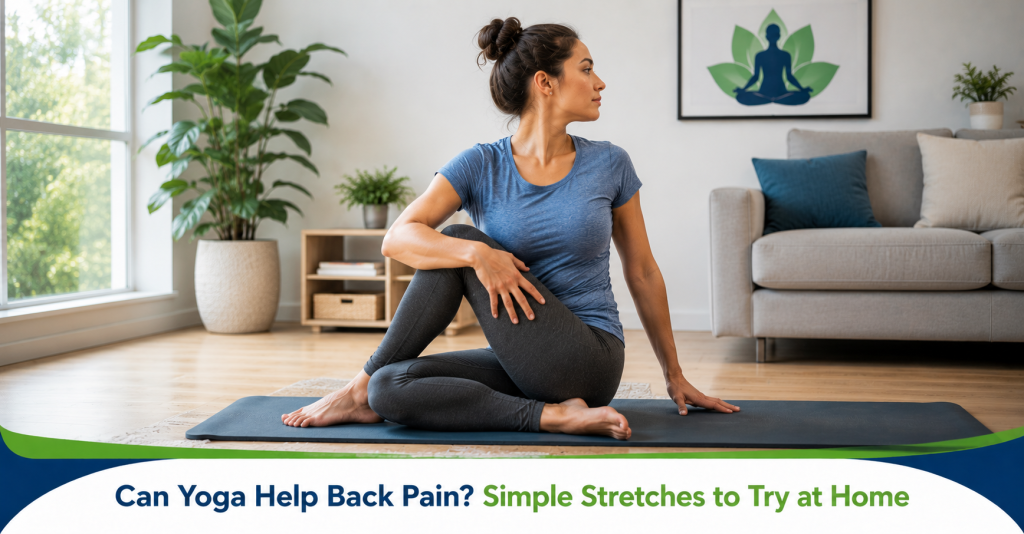
Sitting with legs extended, bend one knee and gently twist your torso toward that side, using your arm for support. This twist improves spinal mobility and can relieve tightness along the sides of your back.
Legs-Up-the-Wall Pose
Lie on your back with your legs resting up against a wall. This restorative pose takes pressure off the lower spine and encourages relaxation, making it a great way to end a stretching session.
Downward-Facing Dog
From your hands and knees, tuck your toes and lift your hips up and back, forming an inverted V shape with your body. This pose gently lengthens the spine, hamstrings, and calves, while also building strength in the shoulders and arms. If your hamstrings feel tight, keep a slight bend in your knees rather than forcing your legs straight.
Common Mistakes to Avoid When Using Yoga for Back Pain
- Forcing a deep stretch instead of easing into it gradually
- Holding your breath during poses instead of breathing steadily
- Skipping modifications when a pose feels too intense
- Practicing only when pain flares up instead of building a consistent habit
- Ignoring pain signals and pushing through sharp discomfort
Expert Advice for Getting the Most Out of Yoga
Consistency is more valuable than intensity when using yoga for back pain relief. A short ten- to fifteen-minute routine done most days of the week tends to produce better results than an occasional long session. Pairing yoga with other posture exercises and stretches and paying attention to your everyday sitting and standing habits can further support the progress you make on the mat.
For some patients, especially those with ongoing stiffness or alignment issues, combining yoga with spinal manipulation and hands-on chiropractic care offers more complete, lasting low back pain relief than stretching alone. If you live in Erlanger, Southgate, or Cold Spring, or commute through Union or Hamilton County, a nearby chiropractor can help you build a plan that works alongside your yoga practice.
When to See a Chiropractor Instead of (or Along With) Yoga
If your back pain does not improve after a few weeks of regular stretching, or if you notice numbness, tingling, or weakness in your legs, it is a sign to get your spine evaluated. A chiropractor can identify what yoga alone may not be able to fix, such as joint restrictions or disc-related issues, and build a more targeted recovery plan.
Frequently Asked Questions
Can yoga help back pain long term?
Yes, for many people, a consistent yoga practice improves flexibility, reduces muscle tension, and strengthens supporting muscles, which can lead to long-term relief from mild to moderate back pain.
What type of yoga is best for back pain?
Gentle or restorative yoga styles that focus on slow movement and stretching, rather than fast-paced or advanced flows, are generally the safest and most effective for back pain relief.
How often should I do yoga for back pain relief?
Most people benefit from practicing gentle yoga stretches for back pain three to five times a week, though even a short daily routine can make a noticeable difference over time.
Can yoga make back pain worse?
If poses are forced or done with poor form, yoga can sometimes aggravate back pain. Moving slowly, listening to your body, and modifying poses as needed helps prevent this.
Is yoga a replacement for chiropractic care?
Yoga can be a helpful complement to chiropractic care, but it is not always a replacement, especially for issues involving joint alignment or nerve irritation that may need hands-on treatment.
What if I am too stiff to do yoga for back pain?
Starting with very gentle poses like child’s pose and legs-up-the-wall, and using props like cushions or blankets for support, can make yoga accessible even for beginners with significant stiffness.
Contact Meade Chiropractic
Florence, KY Chiropractic Office
Call: 859-640-6770
Highland Heights, KY Chiropractic Office
Call: 859-441-8181
Visit: Meade Chiropractic
Conclusion
Yoga for back pain offers a gentle, accessible way to build flexibility, ease tension, and support a healthier spine, all from the comfort of home. By practicing consistently, listening to your body, and knowing when to seek additional support, you can use yoga as one valuable piece of your overall back pain relief routine.
Summary
Yoga for back pain can ease tension, improve flexibility, and strengthen supporting muscles through gentle poses like cat-cow, child’s pose, and cobra. Consistency and proper form matter most, and chiropractic care can help when stretching alone is not enough.