

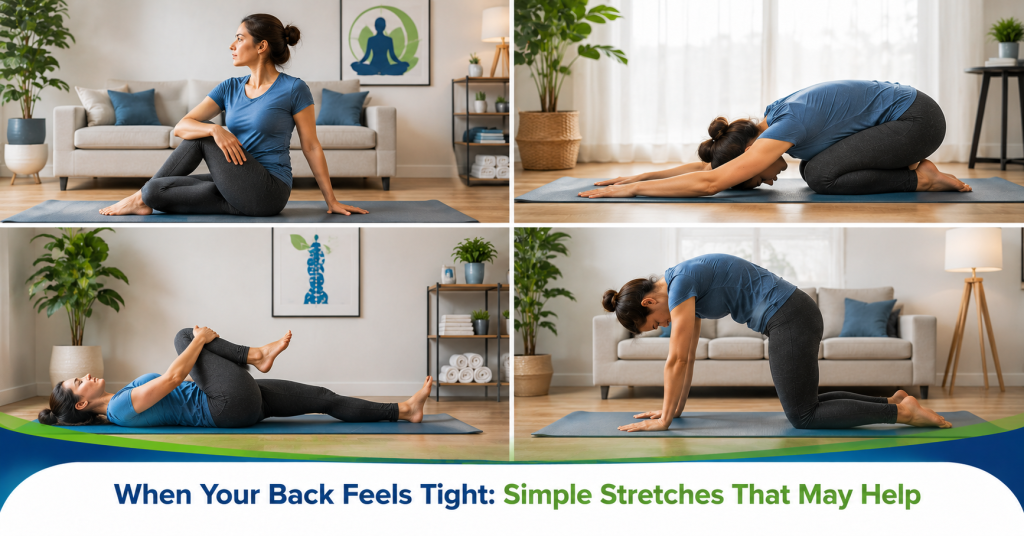
That tight, stiff feeling across your lower or mid back can show up after a long car ride, a busy day at a desk, or even just from sleeping in an awkward position. Meade Chiropractic sees patients dealing with this kind of tightness all the time, and the encouraging news is that a few simple tight back stretches can often bring noticeable relief in just a few minutes.
In this guide, we will look at what usually causes that tight-back feeling, which stretches tend to help most, mistakes to avoid, and when tightness may be a sign of something that needs professional attention.
What Causes That Tight, Stiff Feeling in Your Back?
Muscle tightness in the back is often the body’s response to prolonged positions, overuse, or stress. When muscles stay contracted for long periods, whether from sitting, lifting, or even emotional tension, they can shorten and become less flexible, which shows up as that familiar stiff, “locked up” sensation.
Dehydration, poor sleep positions, and a lack of regular movement throughout the day can all make this tightness worse. Even small daily habits, like carrying a heavy bag on one shoulder or sitting with your wallet in your back pocket, can quietly pull your spine out of its natural alignment over time. In many cases, tight back stretches are enough to loosen things up, but understanding the root cause helps you prevent the tightness from becoming a regular pattern.
When Tightness Is Normal vs. When to Pay Attention
Occasional stiffness after activity or a long day is usually nothing to worry about. However, you should pay closer attention if tightness is paired with sharp pain, numbness, tingling down your leg, or if it lingers for more than a week despite rest and stretching. These signs can point to a deeper issue, such as a joint restriction or nerve irritation, that stretching alone may not resolve. Paying attention to how your body responds to rest versus movement can also give useful clues about what is really driving the tightness.
Simple Stretches for a Tight Back
Standing Side Bend
Stand tall with feet hip-width apart, raise one arm overhead, and gently lean to the opposite side. Hold for a few breaths before switching sides. This stretch lengthens the muscles along the side of your torso and lower back that often tighten from sitting.
Seated Forward Fold
Sitting with your legs extended, hinge forward from your hips and reach toward your feet, keeping your back as straight as comfortable. This stretch targets the hamstrings and lower back, which are closely connected when it comes to tightness.
Piriformis Stretch
Lying on your back, cross one ankle over the opposite knee and gently pull the uncrossed leg toward your chest. This stretch targets the piriformis muscle deep in the hip, which can contribute to lower back tightness when it becomes overly tense.
Thread-the-Needle
Starting on your hands and knees, slide one arm underneath your body and lower your shoulder toward the floor, feeling a stretch through your upper back and shoulder blade area. This move is especially helpful for tightness that sits higher up in the mid-back.
Doorway Chest Opener
Stand in a doorway with your forearms on the frame and step one foot forward, gently opening your chest. Tight chest muscles often pull the shoulders forward and contribute to compensatory tightness in the upper back.
Supine Twist
Lying on your back with knees bent, let both knees fall gently to one side while keeping your shoulders flat on the floor. This gentle twist releases tension along the spine and lower back on both sides.
Common Mistakes People Make When Stretching a Tight Back
- Bouncing into a stretch instead of easing in slowly
- Holding stretches for only a few seconds instead of 20 to 30
- Stretching only the painful area instead of connected muscle groups
- Skipping stretches on days when the back feels fine
- Ignoring persistent tightness instead of having it checked out
Expert Advice for Lasting Relief
A tight back often responds well to a combination of regular stretching, better posture throughout the day, and enough movement to avoid staying in one position for too long. Pairing these habits with other posture exercises and stretches designed for your specific patterns of tightness can help prevent the same areas from tightening up again and again.
When tightness keeps returning despite consistent stretching, it may point to an underlying joint or alignment issue. Spinal manipulation and hands-on chiropractic care can help address these deeper causes and offer more complete low back pain relief than stretching alone. If you live in Alexandria, Burlington, Latonia, or Fort Thomas, or commute through Kenton County, a nearby chiropractor can help you get to the root of recurring tightness.
When to See a Chiropractor for Back Tightness
If tight back stretches provide only short-term relief, or if the tightness keeps returning in the same spot week after week, it is worth having your spine evaluated. A chiropractor can check for joint restrictions, muscle imbalances, or postural patterns that may be keeping that area chronically tight, and build a plan to address the cause rather than just the symptom.
Frequently Asked Questions
What are the best stretches for a tight back?
Gentle options like standing side bends, seated forward folds, and supine twists are effective starting points because they target the major muscle groups that contribute to back tightness.
How long should I hold each stretch for a tight back?
Holding a stretch for 20 to 30 seconds allows the muscle to relax and lengthen. Shorter holds often are not enough to create lasting change in flexibility.
Why does my back feel tight even after stretching?
If tightness returns quickly after stretching, it may be caused by an underlying joint restriction or postural habit rather than the muscle alone, which is a good reason to have it evaluated.
Can stress cause a tight back?
Yes, emotional stress often causes people to unconsciously tense their back and shoulder muscles, which can lead to ongoing tightness even without a physical injury.
How often should I do tight back stretches?
Doing a short stretching routine daily, or at least five days a week, tends to produce better and more lasting results than stretching only when pain shows up.
When should I see a chiropractor for a tight back?
If tightness lasts more than a week, keeps returning in the same area, or comes with numbness or tingling, it is a good time to schedule a chiropractic evaluation.
Contact Meade Chiropractic
Florence, KY Chiropractic Office
Call: 859-640-6770
Highland Heights, KY Chiropractic Office
Call: 859-441-8181
Visit: Meade Chiropractic
Conclusion
A tight, stiff back is common, but it does not have to be something you just live with. By understanding what causes the tightness and using a few targeted stretches consistently, many people find real relief within days. If tightness keeps coming back despite your best efforts, a chiropractic evaluation can help uncover and address the deeper cause.
Summary
A tight back is often caused by prolonged sitting, stress, or muscle imbalances. Stretches like standing side bends, seated forward folds, and supine twists can help, along with consistent movement. Chiropractic care can address recurring tightness that stretching alone does not resolve.